When choosing an air chuck, one of the first things to consider is the flow design. LockNFlate® Air Chucks are available in Open Flow and Closed Flow configurations, which determine how air moves through the chuck and when that airflow is controlled. An Open Flow air chuck lets air pass freely whether it is connected to a valve stem or not, making it the right choice for battery-powered inflators, trigger guns, and inflator gauges that control airflow separately. A Closed Flow air chuck stops airflow until it is connected to the valve stem, making it a good choice for a direct air hose connection.
Straight vs. 90º describes the angle of the air chuck. A Straight Air Chuck provides a direct, in-line connection for easily accessible valve stems, while a 90º Air Chuck uses a right-angle design to reach valve stems in tighter spaces, such as on motorcycles, ATVs, and some trailers. Choosing the right setup means matching both the flow type and head angle to your equipment.
1. Introduction
Choosing the right air chuck can make tire inflation faster, easier, and less frustrating. Whether you're filling tires in your garage, working in a shop, maintaining a fleet, or servicing farm equipment, you need an air chuck that works with both your air source and the valve stems you're trying to reach.
LockNFlate® Air Chucks use a locking jaw design that securely grips the threads of a standard Schrader valve for a hands-free connection. When choosing the right LockNFlate® Air Chuck, there are two basic decisions to make: Open Flow vs. Closed Flow and Straight vs. 90º.
2. Airflow Style: Open vs. Closed
The first question is how airflow is controlled in your setup. Choosing Open Flow or Closed Flow depends largely on what is connected to the air chuck.
What Is a Closed Flow Air Chuck?
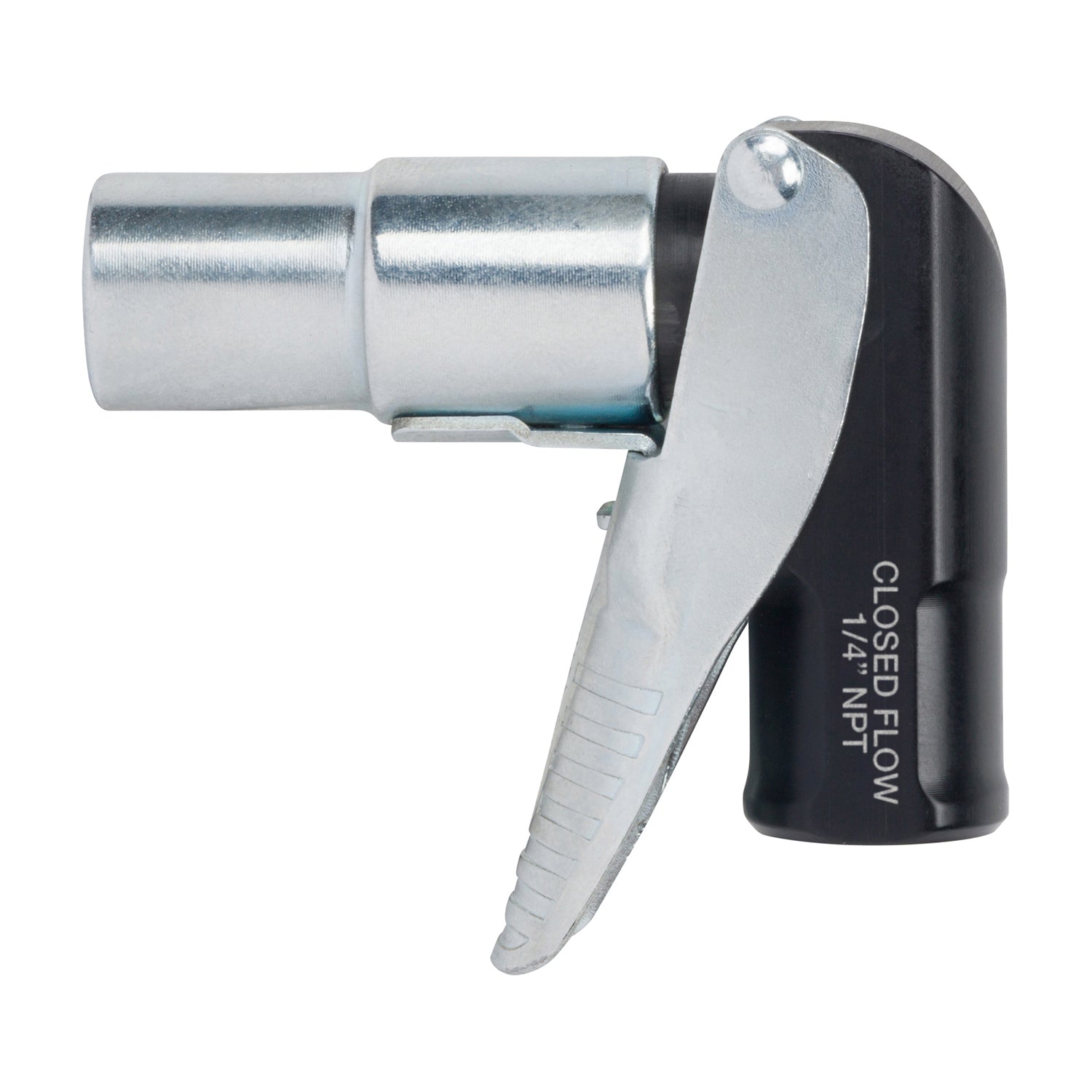
A Closed Flow air chuck stops airflow when it is disconnected from the tire valve. Once the chuck is connected to the valve stem, air can flow into the tire. This makes Closed Flow a good choice when connecting directly to a standard air hose where there is no separate trigger or inflator controlling airflow.

What Is an Open Flow Air Chuck?
An Open Flow air chuck lets air pass through whether or not it is connected to the valve stem. Airflow is controlled by another part of the inflation setup rather than by the chuck itself.
This makes Open Flow the right choice for inflator gauges, trigger-controlled inflators, foot-operated inflators, and many battery-powered portable inflators, including Milwaukee® and DEWALT® models, where the tool controls when air starts and stops.

| Feature / Metric | Open Flow | Closed Flow |
| Internal Check Valve | No (free-flowing airway) | Yes (integrated check valve) |
| Airflow Control | External trigger or inflator gauge | Controlled at the chuck |
| Best Air Source | Trigger-controlled or portable inflators | Direct air hose connection |
| When Disconnected | Air can pass through the chuck | Airflow stops |
3. Physical Angle: Straight vs. 90º
Once you've determined the right flow style, the next consideration is the physical angle of the air chuck. The best choice depends on how much room you have around the valve stem.
Straight Air Chuck: Features & Applications
A Straight Air Chuck lines up directly with the tire valve stem, providing a natural push-on connection when the valve is easy to reach.
- Design Benefits: Provides a direct, in-line connection that makes it easy to push the chuck straight onto an accessible valve stem.
- Best Used For: Everyday garage and shop use, passenger cars, light trucks, trailers, and other wheels where there is plenty of clearance around the valve stem.
90º Air Chuck: Features & Best Use Cases
A 90º Air Chuck positions the connection at a right angle, making it easier to reach valve stems where straight-on access is limited.
- Design Benefits: Provides easier access when wheel design, brake components, hubs, or spokes make it difficult to approach the valve stem straight on.
- Best Used For: Motorcycles, ATVs, lawn and garden equipment, trailers, and automotive wheels with limited clearance around the valve stem.
Dual-Head Air Chucks
Dual-wheel setups present another challenge because the inner valve stem can be difficult to reach. LockNLube offers dedicated Dual Wheel Air Chucks designed to reach inner and outer valve stems without removing the outer wheel. Different lengths and head configurations are available for applications ranging from pickups and light trucks to semis and other commercial vehicles.
Application Guide
- Home garages and portable tire inflators
- Commercial trucking and fleet maintenance
- Motorcycles, RVs, trailers, and wheels with limited valve-stem clearance
4. Key Buying Factors
When choosing the right air chuck, consider these three factors:
- Connection Mechanism: Traditional clip-on chucks rely on a spring clip to hold the chuck onto the valve stem. LockNFlate® Air Chucks use six hardened steel jaws that lock onto the Schrader valve threads for a secure, hands-free connection.
- Thread Compatibility & NPT Sizing: Make sure the air chuck is compatible with the fittings on your hose or inflator. LockNFlate® Air Chucks use a standard 1/4" NPT female thread. Some portable inflators with screw-on hoses may require an adapter to connect to the air chuck.
- Maximum PSI & Working Pressure: Always check the working pressure rating for your air chuck and inflation equipment. Standard LockNFlate® Air Chucks are rated to 150 PSI, while the LockNFlate® XL Air Chuck, designed for large-bore valves on heavy equipment, is rated to 250 PSI.
Want to learn more about how air chucks work? Read our Beginner's Guide to Air Chucks.
5. Conclusion
Choosing the right air chuck comes down to two basic questions: How is airflow controlled, and how easy is the valve stem to reach? Open Flow vs. Closed Flow determines how air moves through the chuck, while Straight vs. 90º determines how you connect to the valve stem.
Once you know what your inflation setup requires, choosing the right LockNFlate® Air Chuck is much easier. The locking jaw design provides a secure, hands-free connection that helps eliminate the slipping and leaking commonly associated with traditional clip-on air chucks.
Want to learn more about the difference between locking and traditional clip-on designs? Read Locking Air Chuck vs. Standard Clip-On Chuck.
Frequently Asked Questions
1. What makes the LockNFlate® XL Air Chuck different from standard Straight and 90º Air Chucks?
The LockNFlate® XL Air Chuck is designed specifically for large-bore VG12/12V1 valves found on heavy construction, mining, and farm equipment. It is rated to 250 PSI, compared with 150 PSI for standard LockNFlate® Air Chucks designed for standard Schrader valves.
2. Is the LockNFlate® XL Air Chuck compatible with standard air hoses?
Yes. The LockNFlate® XL Air Chuck uses a standard 1/4" NPT female thread for connection to compatible air hose fittings.
3. Which LockNFlate® XL Air Chuck should I use with a battery-powered inflator?
For a battery-powered inflator that controls airflow with its own trigger or switch, choose the Open Flow LockNFlate® XL Air Chuck.
4. Is a locking air chuck more secure than a traditional clip-on chuck?
The six-jaw design of a LockNFlate® Air Chuck locks onto the threads of the valve stem rather than relying on a traditional spring clip. This provides a secure, hands-free connection and helps prevent the chuck from slipping off the valve stem during inflation.
5. Can LockNFlate® Air Chucks be used with the valve core removed?
Yes. LockNFlate® Straight, 90º, and XL Air Chucks can be used with the valve core removed. Their spring-loaded TP